
When markets for premium toilet paper and convenience store wine start to prove themselves, a brand reckoning isn’t far behind.
When I arrived in Tokyo’s Nirita International Airport on a cold December morning, before I even searched for baggage claim, I had located my first asian 7-Eleven on the second floor of arrivals.
It was all there — puffy cloud pastries, fried chicken on a stick (soon to become my preferred breakfast for the next two weeks), racks of single sushi pieces in colorful wrapping — and it all lived up to the hype.
The fabled foodie culture that haloed 7-Elevens overseas just two years ago hadn’t quite come to the US at that point, but today something is changing.
More and more people are posting 7-Eleven food hauls, hunting down limited edition 7–Eleven foods, sanctifying new products with enthusiastic taste tests and talking about the midnight convenience store run more like a gastronome hobby than a stoner pastime.

Through their 7-SELECT private label, limited edition releases of emotionally driven food brands, the 7NOW delivery app and new lab stores that test concepts like turmeric slurpees, the company has started to drive a wedge between the words “convenience store” and “cheap junk food”.
Although many fan posts still use #junkfood, it is more of a term of endearment than derision.
There is an active hunt for that one 7-Eleven food you haven’t felt before. You may have seen Slurpees and Sour Patch Kids, but when you see a Slurpee push pop or a bag of only blue Sour Patch gummies, you feel delighted before you even know what you’re looking at.
View this post on Instagram
It’s a move straight out of the Trader Joe’s playbook: start a food movement around the thrill of discovery.
By constantly evolving their inventory and rearranging product mix in their stores, 7-Eleven is creating an experience where we can tell ourselves that we’re not only fun foodie people, but tastemakers on the bleeding edge of this new foodie movement — and it’s still dirt cheap.
This is the new premiumization. There is no premium price point but there is definitely a cost to participate. Whether it’s time, education, emotional investment or understanding the unwritten code, premium brands make us pay in ways that are perhaps more costly than money to begin with.
New premium brands don’t charge in dollars. They charge in expensive intangibles like time, emotion, education and understanding.
When you charge a premium that can’t be measured in dollars, you’re trading, not transacting. This isn’t an exchange of goods and services. This is a reciprocity of commitment. It’s very clearly a different kind of relationship.
Of course it doesn’t stop there. Last year, 7-Eleven launched their own premium private label bottled wines and canned wines, named Voyager Point and Roamer, respectively.
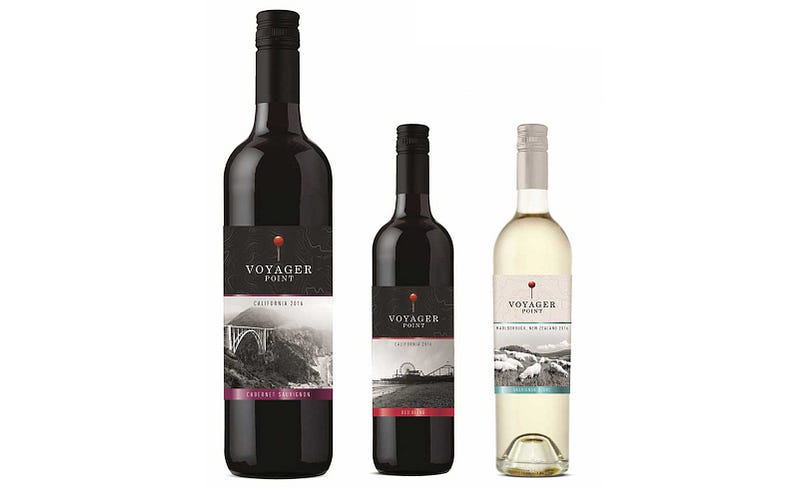
This is in addition to 7-Eleven’s value-priced Yosemite Road and Trojan Horse wines. As they build their wine selection horizontally across price segments, they’re signalling to the market that you don’t come to 7-Eleven to get cheap wine. You come to 7-Eleven to evolve your tastes.
That may seem like an exaggeration, but when taken in context with all of their other efforts to grow the brand story, including experimenting with private label meal kits, kombucha aisles, local craft drinks, patios, interior dining areas and rustic decor, you get the idea that you can invest time here.
There is something much more to be had than just food or convenience. You can feel all of the emotions that come with building a meaningful meal, and learn about the secret world of a well-stocked 7-Eleven.
If there’s a lesson here, it’s this: Anyone — literally anyone — can be a premium brand. We are living in a time when consumers will let brands change as they outgrow their heritage. They will allow for you to redefine yourself in a way that previous generations may have had difficulty with (i.e. New Coke).
The revolution is taking over every inch of real estate from the forgotten corners under your bathroom sink to the lines on your monthly portfolio statements.
But new premiumization isn’t just a clever story and good packaging. There’s more to it than meets the eye.
And when the dust settles, there will be winners and losers.
The Balloon Crowding Out Value and Luxury
To fully understand this new premiumization, we need to discard any old connotations around the word.
Premiumization is not a form of diffusion branding, nor is it a higher margin (although a higher price point may be there, it’s not core to the brand’s positioning). The notion of what is premium has completely untethered from the product, its heritage, its quality or its features.
Consider the endless parade of premium brands that are either eroding value from their luxury counterparts above, or stealing marketshare from their value-priced neighbors below.
Pay attention to where the real cost is incurred for each of these examples. Any premium in price pales in comparison to the emotional, educational, time or personal commitment cost hiding beneath the brand.
WaterWipes
In case you were wondering if there was a new way to package water and sell it, there is. This brand has taken over the baby wipes category by storm by virtue of the fact that its only ingredients are water and a drop of fruit extract. I’m a new mother and even though I know the mechanics at play here, I still co-sign this.
This is not an easy category to make gains in. It’s a commodity product, the behemoth that is Amazon had introduced their own private label version of baby wipes, and by 2016 they had driven the price so low, even Huggies and Pampers were forced to follow with cheaper prices.
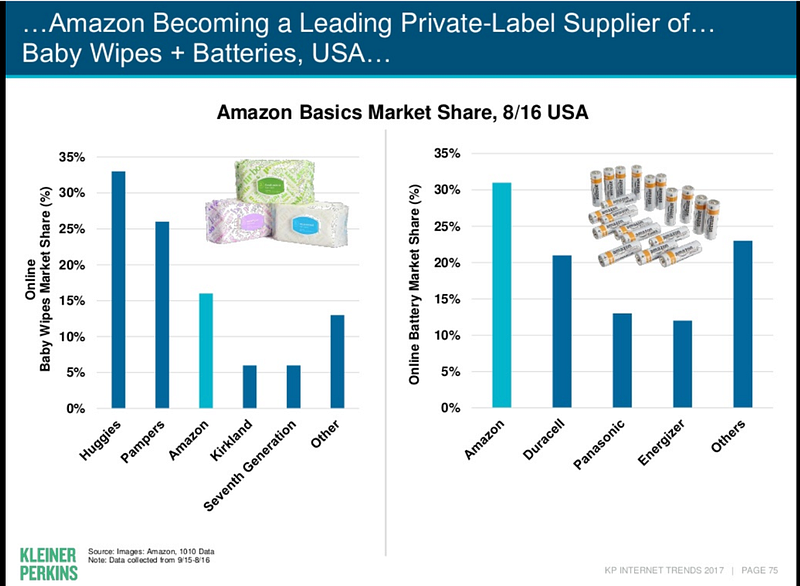
When WaterWipes entered the US market, they became a viral hit. Billing themselves as the “World’s Purest Baby Wipes” and crafting a premium brand by way of storytelling, reimagining of a product’s meaning and it’s role in the home, they gained significant marketshare.
Although their cost is not core to their premium positioning, the fact that they command a 300% premium in the market does reveal something important —even water can be made more valuable. That’s 300% that has absolutely nothing to do with inherent quality, heritage, craftsmanship or luxury.
Pet Food
Remember when Fancy Feast and that flamboyant white cat were the only game in town?
Times have changed. Today’s market for premium pet food runs the gamut from niche local brands inspired by clean eating, to celebrity fronted names like Rachel Ray’s Nutrish brand dog food.
Consider the fact that you can now buy pet food in the pet food aisle, the refrigerated foods, the frozen section, in health food stores, in sporting goods stores, in gourmet cooking stores, have it delivered fresh to your door, and of course, get it online.
Premium pet food isn’t about feeding an animal. It’s about the overall lifestyle of the pet owner. That’s why Nutrish’s parent company Ainsworth Pet Nutrition was able to sell to J.M. Smucker Co. for nearly $2 billion.
Uqora
This is an interesting premium brand that I have been watching for a while, and consistently I have seen them make smart, brand-led moves.
Uqora is an over-the-counter supplement brand that helps women deal with potentially dangerous urinary tract infections, often triggered by sex. The medical community has no real preventative solution other than antibiotics, and an invisible faction of women has silently suffered without a real solution — a story Uqora has carefully managed to surface in their content.
But if you do some searching, you will find that a supplement called D-Mannose has helped women who are searching for a DIY cure. You can buy D-Mannose, basically a sugar that prevents bacteria from attaching to the urinary tract, in bulk on Amazon.
Uquora has taken this commodity supplement and repackaged it with a hefty amount of vitamin C. D-Mannose is not rare or exotic. It’s cheap. It’s available for delivery. It’s there if you need it.
What made this a premium brand was the fact that they created a new narrative — a narrative that forced its users to invest emotionally, personally change their views and pay with the time it took them to learn this new perspective. This is the premium price.
To truly understand the genius in their approach, you have to first take a look at something like Viagra.
Both Viagra and Uqora are actually in the business of sex. And not just any kind of sex, but sex inside of a relationship. Viagra took the subject of erectile dysfunction, a very emotionally charged issue between a couple, and made ads like this:
https://www.youtube.com/watch?v=TYIfls7Inh4
It’s been well documented that when ED hits, the woman probably doesn’t demand sex like an expectant minx. Instead, she’s likely to blame herself and feel a just as much shame as her male partner, making an already loaded issue even more complicated. Ads like this often misrepresent the emotional turmoil that ED can cause.
Uquora also exists between two people in the context of their sex lives, but their approach is very different (watch the video here):
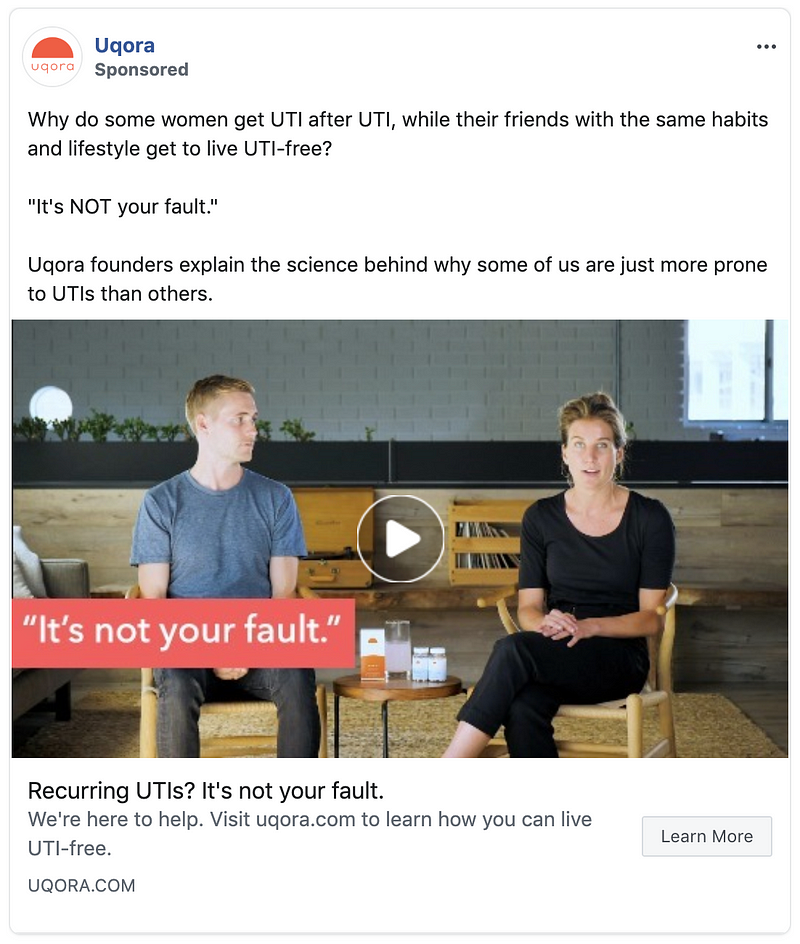
They get right into that uncomfortable spot between two people. They involve both parties. They uncover triggers and fears in a way that others have failed to do, and they do it in a supportive context.
This is not a premium product, but it is a premium brand.
The list goes on and on…
- Karmicare and Twice: Two different toothpaste brands, both deconstructing the toothbrushing experience into day and night rituals, both reinventing your relationship with your mouth.
- The InstantPot retail phenomenon: Basically the same pressure cooker that we’ve always been afraid to use, but suddenly made friendly with better buttons and a new ethos around the magic of super-fast cooking.
- Blenders like Vitamix: Simple countertop machines that have no business flaunting so much horsepower, but have become a $500 symbol of middle-class superiority.
- Taco Bell Hotel: We all laughed. And then it sold out in two minutes.
- Peach Goods Toilet Paper: It’s a subscription service that uses phrases like “Developed with diligence”, “Made in American plain country” and “We believe in moments for ourselves”. And they’re in good company with other names like Tushy , Who Gives A Crap, No. 2 and Cheeky Monkey.
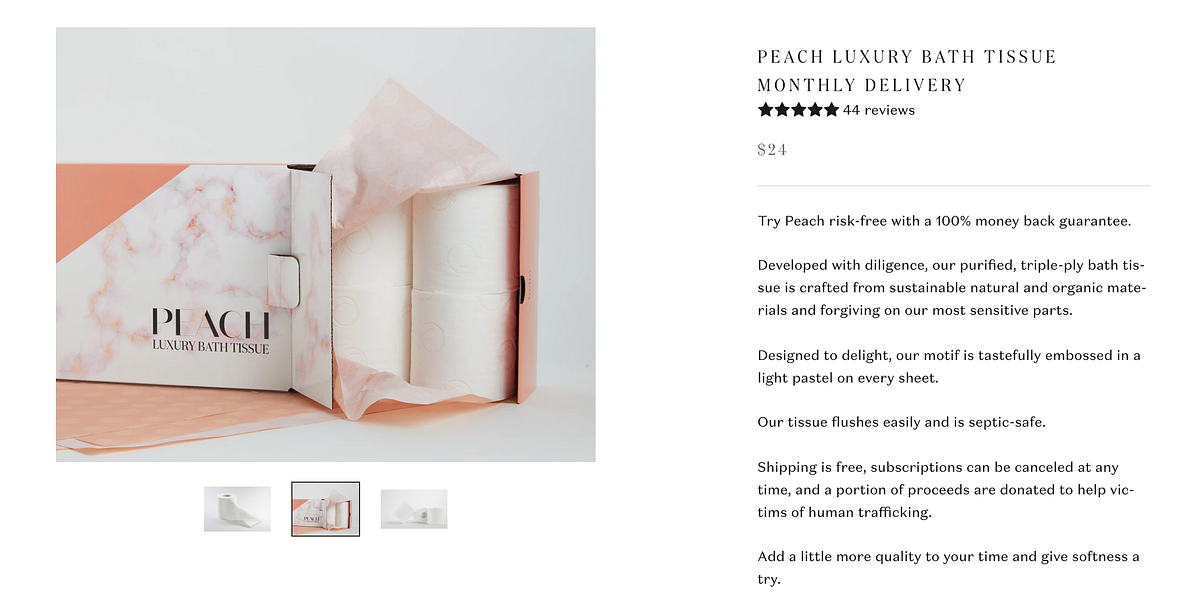
When you pay for these brands, you pay with a piece of your identity. If you become emotionally invested, have to learn a new code or spend time to understand something you didn’t know before, then you are paying for the premium.
Alchemy at the Edges of Your Category
So why is all of this happening?
The bulk of my research as a brand strategist has led to this question. Why are today’s consumers fueling the emergence of premium brands across every single category?
Yes, we’ve moved into the experience economy. Yes, people want to participate in stories. But these aren’t the answers, these are the effects.
What’s happening is a shift in where we draw value as a culture. Where we once found meaning in the focused perfection of a single product or vertical, we now look for meaning in the blending between spaces.
The intimate act of eating has birthed a movement around functional foods (food + medicine), traditional education was the unwitting precursor to edutainment brands like Masterclass (education + entertainment), and even something as simple as the humble water bottle has evolved into a new ‘hydration’ category with brands like S’well and Corkcicle (water bottles + lifestyle).
When you combine to create something entirely new, you build meaning where there was none before — the pinnacle of brand-led companies. It’s this alchemy that has powered the premium market.
You see this blending everywhere:
- Food is the new religion: “Good” foods, “bad” foods, “clean” foods, “pure” foods — we’ve come to apply religious principles to the foods we eat because, as researchers like Alan Levinovitz have pointed out, “Seeking out natural products is about health, yes, but holistic health. Physical and spiritual, personal and planetary. Nature becomes a secular stand-in for God, and the word ‘natural’ a synonym for ‘holy.’”
- Gyms are the new temple: SoulCycle is a daily pilgrimage toward an out-of-body experience. CrossFit is where we push ourselves from manliness to godliness. Heated yoga inspires heart-racing highs. We emerge from all of these hallowed spaces as better, purer beings.
- Pets are the new children: You don’t need to go any further than the phrase “fur baby” to see this. We millennials see our pets as ‘starter children’ and spend money on them like we would children, too. Heated cat houses, dog ice cream, puppy beer, cat wine, ornate halloween costumes, rechargeable fetch machines and leash umbrellas are just the eccentric goods that come with the territory.
- Founders and VCs are the new celebrities: It was only weird for a little while when Ben Horowitz hung out with Kanye. Gary Vaynerchuck has a one-man documentary crew follow him around. Elon Musk’s autograph is probably worth more than any A-lister in Hollywood. You see the pattern.
As a culture, we are searching for new meaning, and new meaning comes from the unexpected combinations that cause us to experience and understand the world differently.
If 7-Eleven would have been bold enough to try today’s rebrand 30 years ago, it wouldn’t have worked. Back then, we were still deriving meaning from categories in silos (the best car, the best tech, the best product, the best anything).
But we, the consumer, have changed. We didn’t scoff at 7-Eleven’s moves because we understand they’re going somewhere. We know that if we invest in them with our patience and curiosity, they will delight us.
Who Will Be Standing When the Dust Settles
We’re living in the wild west of premiumization right now. The rules are still being written and every time a new cowboy comes riding into town, the everyone gets shaken up.
But there is one truth emerging, and it is the rule that will define the winners and losers when the landscape starts to mature.
The winners in the new premium space will be the ones that committed to something bigger.
Forget story, forget packaging, forget design, forget all the trappings of a flashy new D2C company. Instead, pay attention to who is consistently creating meaning outside of themselves.
You don’t need to be in CPG to do this. Wealthsimple, a clear cut investment platform (like all those that have come before it) proves that.
They are not talking about how to invest and make money. They are having a much larger conversation about what money means.
This isn’t a simple topic. Everyone from the Dalai Lama to Dr. Laura has tried to tackle it… but perhaps never before has an investment firm tried like this.

In their Money Diaries section of the Wealthsimple Magazine, the company reveals the very messy, very human side of how famous people deal with money. You quickly come to understand that money is about self-worth wrapped up in all kinds of emotions like fear, denial and joy. The content is engineered to remove judgement and change your relationship with your own bank statement.
“We never had money. You learn, as a kid whose family is broke, not to ask for things. You even learn not to want things. Just be happy with the basics you need to survive: food, clothes, and a place to live, which my mom always found a way to provide.
But every year, as Christmas approached, it meant the same heartbreaking ritual. My mom would sit my brother Sergio and I down and say to us, “I’m so sorry, but there won’t be any Christmas presents this year. I just can’t really make it happen.” She’d have tears in her eyes.
It wasn’t the lack of presents that broke my heart; it was seeing my mom feeling like she’d failed us, even though we’d tell her again and again that she hadn’t.”
– Excerpt from interview with actress Sasha Lane
In the Dear Ms. Etiquette section, readers get answers to hairy questions like “Do I need to have to lend my siblings money?” and “I just got engaged! Yay! So can I ask him for a prenup or does that mean I’m actually dead inside?”
This isn’t really about etiquette so much as it is about permission. Their readers already know what is right. What they’re really seeking is for someone to tell them it is.
All of this content is about creating something that didn’t exist before it. Wealthsimple is taking a machete into the overgrown wilderness that is money and clearing a path for people to inch forward in.
It’s a commitment, and if you felt a range of cathartic emotions as you clickholed your way deeper into this excellent storytelling, then you repaid that commitment with a premium.
Even our dear friends at 7-Eleven are committed to something bigger.
“We’ve been on this journey to redefine convenience,” said EVP Gurmeet Singh in a recent statement. “This makes it easy for people to stay in the moment.”
Nice, but not entirely accurate. What they’ve really committed to is honoring the food some of us love, but others among us hurtfully call “junk”.
Whether that’s reinventing it to be healthier, repackaging it to delight us as it did when we were children, or pairing it with something a bit more adult, it’s all the same thing: a way to create new meaning where there was none before.